2026 and 2025 contain key operational milestones for the US Census Bureau in preparation for 2030.
We've tracked critical expected milestones: none proceeded as expected or scheduled.
Oppose harmful proposed changes to the 2030 Census by commenting and spreading the word!
The Census Bureau is considering a rule that would exclude some non-citizens from the count used to divide seats in Congress, stop collecting race and ethnicity data, and change how people are counted based on where they live. These aren’t small technical tweaks — they determine whether your neighborhood gets fair representation and its share of federal funding for the next decade.
Take these actions TODAY:
Understand what’s at stake with resources like the Leadership Conference Education Fund Action Guide and even the Census Bureau’s own preliminary impact analysis. Our resource page on the proposed rule also contains detailed breakdowns of the potential consequences from Census Counts and S-CAN partners.
You don’t need to be a policy expert to weigh in, and every comment on record matters — agencies are required to read and respond to them. Use the Census Counts letter template, the Hands Off Our Census comment guide, or a number of comment portals from census-concerned organizations.
Empower your networks and community by spreading the word. Use these Leadership Conference Education Fund talking points, messaging guides, and news coverage on our resource page to break down the issue and build people power.
Quick Key Resources:
Upcoming Webinars
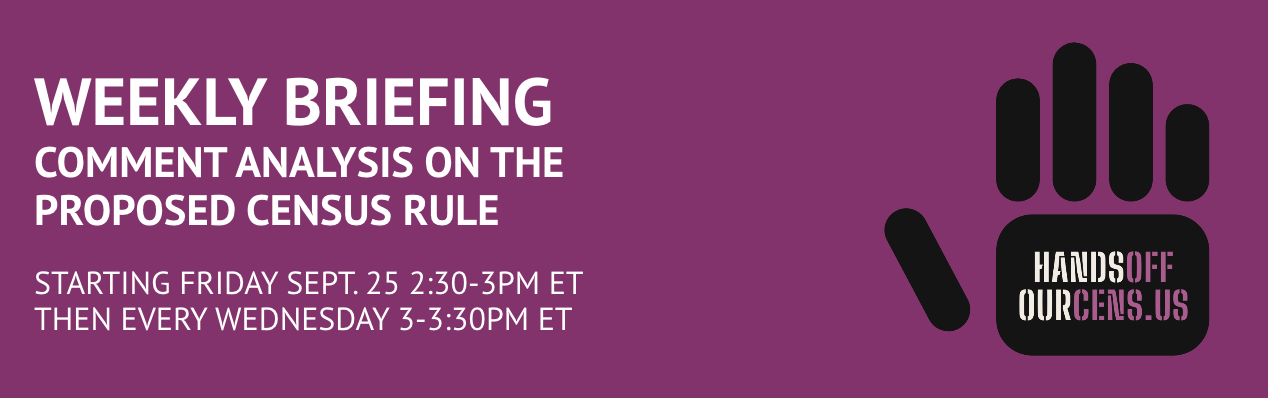
handsoffourcens.us Weekly Briefing: Comment Analysis on the Proposed Census Rule
October 28 @ 3:00 pm - 4:00 pm EDT
handsoffourcens.us Weekly Briefing: Comment Analysis on the Proposed Census Rule
November 4 @ 3:00 pm - 4:00 pm EST
handsoffourcens.us Weekly Briefing: Comment Analysis on the Proposed Census Rule
November 11 @ 3:00 pm - 4:00 pm EST
Which Roadmap path is best for you?
Check below to see which description best captures you and click to see suggestions fashioned for your interest.
I use the census for shaping my work.
Businesses, Elected Officials, Civil Servants, Unions, and Advocacy Organizations
I help utilize, report on, and explain the census.
Educators, Libraries, Community-Based Organizations, Influencers, Researchers, and Media
I want to support organizations using the Roadmap.
Funders, Grantmaking Organizations, Potential In-Kind Partners
What is the Roadmap to the 2030 Census?
The Leadership Conference Education Fund and Census Counts developed the “Roadmap to the 2030 Census.” This resource includes U.S. Census Bureau milestones and concrete examples of ways community-based and advocacy organizations, state and local governments, and other partners can engage in census work throughout the decade.
Why start now on the 2030 Census?
The census provides a snapshot of the nation’s population and its demographics. Ensuring accuracy is vital because this data influences legislative representation, the allocation of federal funds, and helps policymakers make informed decisions. Starting early allows for thorough preparation and avoids last-minute pitfalls, which can jeopardize accurate counts.
Census data determines the distribution of over hundreds of billions of dollars in federal funding each year. An undercount can lead to significant underfunding for communities, affecting schools, healthcare, infrastructure, and other public services. By starting planning now, communities can be adequately reached and represented, ensuring they receive their fair share of resources.
Raising awareness is a time-consuming process that involves educating the public on the importance of the census, dispelling myths, and addressing concerns. By starting early, there’s ample time to engage with various communities, especially those historically undercounted, and mobilize them to participate.
Numerous challenges can emerge, from logistical issues like accessing remote areas to cultural or language barriers that make some populations harder to reach. Starting early provides the time to identify these challenges and develop tailored strategies to address them effectively.
Community-based organizations and advocacy groups play a pivotal role in reaching out to and mobilizing diverse communities, especially those that are historically underrepresented or mistrustful of government initiatives. Starting early allows these groups to form partnerships, coordinate efforts, share resources, and tailor their outreach strategies to the specific needs of the communities they serve. This collaborative approach enhances trust, maximizes resources, and ensures a comprehensive outreach, ultimately leading to a more accurate census count.